Supreme Court Agrees to Hear Union Government’s Challenge to Bombay High Court Verdict Striking Down IT Rules on Fact-Check Unit
Lexpedia News · 10 March 2026 · 5 min read
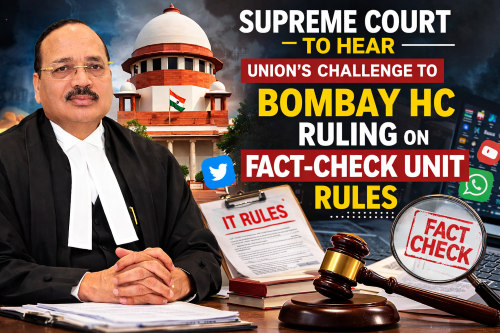
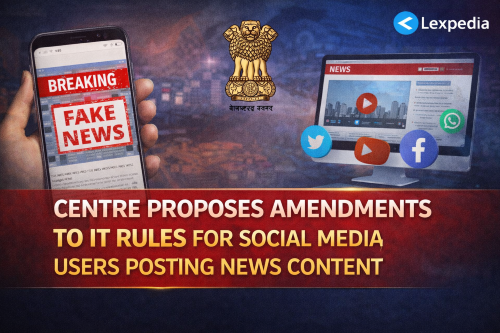
The Supreme Court of India has agreed to hear the Union Government’s challenge to the Bombay High Court judgment that struck down the provisions of the Information Technology (IT) Rules enabling the establishment of a government-run Fact Check Unit (FCU).
However, the Court refused to stay the Bombay High Court’s ruling while admitting the matter for consideration.
The development marks a significant step in an ongoing legal battle over the constitutional validity of government-controlled mechanisms for identifying “fake news” on social media platforms.
Case Background
The dispute relates to the Information Technology (Intermediary Guidelines and Digital Media Ethics Code) Amendment Rules, 2023, which introduced Rule 3(1)(b)(v) allowing the Central Government to create a Fact Check Unit to identify online information about the government that it considers “fake, false or misleading.”
Under the amended rule:
- Social media intermediaries were required to remove or disable access to content flagged by the government’s FCU.
- Failure to comply could lead to loss of safe-harbour protection available under Section 79 of the Information Technology Act, 2000, exposing intermediaries to legal liability.
Critics argued that the rule would effectively make the government the arbiter of truth regarding information about itself, raising concerns about censorship and suppression of free speech.
Bombay High Court Judgment
In September 2024, the Bombay High Court struck down the amended rule, holding that it was unconstitutional and violated fundamental rights.
The Court found that:
- The rule infringed Article 19(1)(a) (freedom of speech and expression).
- It imposed restrictions beyond those permitted under Article 19(2) of the Constitution.
- The provision was vague and overbroad, which could create a “chilling effect” on free speech.
The High Court also noted that the amendment effectively allowed the government to determine whether information about itself was true or false, which raised serious constitutional concerns.
Union Government’s Appeal
Following the High Court ruling, the Union Government filed petitions before the Supreme Court challenging the judgment.
During the hearing, Solicitor General Tushar Mehta, appearing for the Union, requested the Court to stay the High Court’s verdict.
However, the Supreme Court declined this request and instead decided to examine the matter in detail through a full hearing.
The Court noted that the issue raised important constitutional questions regarding regulation of online content and free speech on digital platforms.
Earlier Proceedings in the Fact-Check Unit Case
The controversy over the FCU has already seen multiple rounds of litigation:
- The 2023 amendment to the IT Rules was challenged before the Bombay High Court by several petitioners, including comedian Kunal Kamra and media organizations.
- Petitioners argued that the rule violated the right to free speech and placed excessive obligations on intermediaries.
- The Supreme Court had earlier stayed the notification operationalising the Fact-Check Unit pending the High Court’s final decision.
Issues Before the Supreme Court
The Supreme Court will now examine several critical constitutional questions, including:
- Whether the IT Rules amendment empowering the Fact Check Unit violates the freedom of speech under Article 19(1)(a).
- Whether allowing the government to determine “fake news” about itself creates a conflict of interest.
- Whether the rule imposes disproportionate obligations on intermediaries and undermines safe-harbour protections under the IT Act.
The case is expected to have major implications for digital governance, online speech, and regulation of social media platforms in India.
आईटी नियमों के फैक्ट-चेक यूनिट मामले में बॉम्बे हाईकोर्ट के फैसले के खिलाफ केंद्र की याचिका पर सुनवाई को सुप्रीम कोर्ट तैयार
सुप्रीम कोर्ट ने केंद्र सरकार की उस याचिका पर सुनवाई करने के लिए सहमति दे दी है जिसमें बॉम्बे हाईकोर्ट के उस फैसले को चुनौती दी गई है जिसने आईटी नियमों के तहत फैक्ट-चेक यूनिट (FCU) से संबंधित प्रावधानों को रद्द कर दिया था।
हालांकि सुप्रीम कोर्ट ने बॉम्बे हाईकोर्ट के फैसले पर रोक लगाने से इनकार कर दिया और कहा कि मामले की विस्तृत सुनवाई की जाएगी।
मामले की पृष्ठभूमि
यह विवाद सूचना प्रौद्योगिकी (मध्यस्थ दिशानिर्देश और डिजिटल मीडिया आचार संहिता) संशोधन नियम, 2023 से जुड़ा है।
इस संशोधन के तहत:
- केंद्र सरकार को फैक्ट-चेक यूनिट (Fact Check Unit) स्थापित करने का अधिकार दिया गया था।
- यह यूनिट सरकार से संबंधित ऑनलाइन जानकारी को “फर्जी, गलत या भ्रामक” घोषित कर सकती थी।
- ऐसे मामलों में सोशल मीडिया प्लेटफॉर्म को उस सामग्री को हटाना पड़ सकता था।
यदि प्लेटफॉर्म ऐसा नहीं करते, तो उन्हें आईटी एक्ट, 2000 की धारा 79 के तहत मिलने वाली “सेफ हार्बर” सुरक्षा खोनी पड़ सकती थी।
बॉम्बे हाईकोर्ट का फैसला
सितंबर 2024 में बॉम्बे हाईकोर्ट ने इस नियम को असंवैधानिक घोषित कर दिया।
अदालत ने कहा कि:
- यह नियम अनुच्छेद 19(1)(a) के तहत अभिव्यक्ति की स्वतंत्रता का उल्लंघन करता है।
- यह प्रावधान अत्यधिक व्यापक और अस्पष्ट है, जिससे अभिव्यक्ति की स्वतंत्रता पर ठंडा प्रभाव (chilling effect) पड़ सकता है।
हाईकोर्ट ने यह भी कहा कि यह व्यवस्था सरकार को अपने ही बारे में जानकारी की सत्यता तय करने का अधिकार देती है, जो संविधान के सिद्धांतों के खिलाफ है।
सुप्रीम कोर्ट में केंद्र की अपील
हाईकोर्ट के फैसले के बाद केंद्र सरकार ने सुप्रीम कोर्ट में अपील दायर की।
सुनवाई के दौरान सॉलिसिटर जनरल तुषार मेहता ने हाईकोर्ट के फैसले पर रोक लगाने की मांग की, लेकिन सुप्रीम कोर्ट ने इस मांग को स्वीकार नहीं किया।
हालांकि अदालत ने कहा कि यह मामला महत्वपूर्ण संवैधानिक प्रश्न उठाता है, इसलिए इसकी विस्तृत सुनवाई की जाएगी।
मामले का महत्व
यह मामला भारत में ऑनलाइन अभिव्यक्ति की स्वतंत्रता और डिजिटल प्लेटफॉर्म के नियमन से जुड़ा एक महत्वपूर्ण विवाद बन गया है।
सुप्रीम कोर्ट का अंतिम फैसला निम्नलिखित मुद्दों पर व्यापक प्रभाव डाल सकता है:
- सोशल मीडिया पर फेक न्यूज से निपटने के सरकारी तंत्र की वैधता
- डिजिटल प्लेटफॉर्म की जिम्मेदारी
- अभिव्यक्ति की स्वतंत्रता और राज्य नियंत्रण के बीच संतुलन