Telangana High Court Rules Against 'Further Chief Examination' in Corruption Case, Cites Violation of Indian Evidence Act
Lexpedia · 8 April 2025 · 3 min read
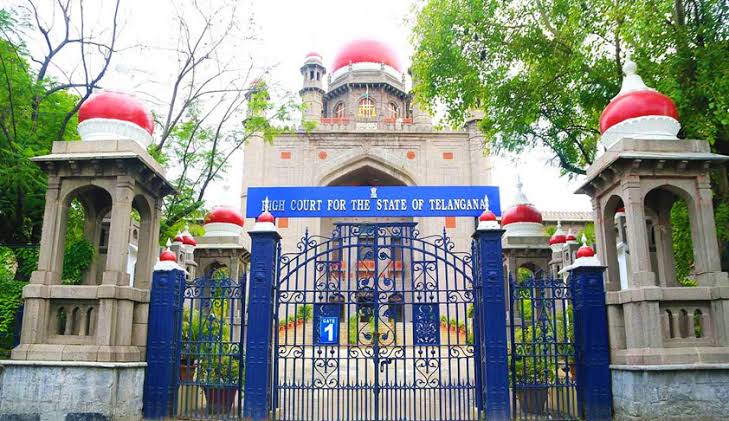
In a significant ruling, the Telangana High Court held that the prosecution cannot conduct a further chief examination after the cross-examination of a witness in a criminal case. The Court emphasized that such an action violates the provisions under Sections 137 and 138 of the Indian Evidence Act, which govern the process of witness examination.
The judgment, delivered by Justice K. Surender, clarified that once the chief examination of a witness is completed, the cross-examination follows, and thereafter, any examination by the prosecution should be limited to re-examination. Re-examination is only allowed to explain matters referred to during cross-examination and cannot be used to fill any gaps or lacunae in the prosecution’s case.
Key Observations of the Court:
- Section 137 and 138 of the Indian Evidence Act clearly lay down the procedure for witness examination: chief examination, followed by cross-examination, and then re-examination. Once the chief examination is complete, the prosecution cannot introduce new material or conduct a "further chief examination" to strengthen its case.
- The Court noted that any attempt to conduct further examination after the cross-examination, to fill in perceived gaps in the evidence, is contrary to the Indian Evidence Act.
- The limited scope of re-examination was highlighted, and the Court did not approve of the prosecution's attempt to use further chief examination to introduce new facts or rectify omissions.
Case Background:
The appeal was filed by L. Venkateshwara Rao, challenging his conviction under Sections 7 and 13(d) read with Section 13(2) of the Prevention of Corruption Act, 1988. Rao, a Special Revenue Inspector, was sentenced to rigorous imprisonment for six months and one year respectively after being found guilty of demanding a bribe.
The facts of the case involved a complainant who, after multiple visits to the appellant's office, alleged that Rao demanded Rs. 500 in exchange for processing an application. The complainant, along with a mediator (PW5), approached the DSP, and a trap operation was conducted. The appellant was caught red-handed, and chemical tests confirmed the presence of phenolphthalein on the tainted currency notes, corroborating the bribery.
However, during trial, an important issue arose regarding the testimony of PW5, the mediator. In his chief examination, PW5 did not recall certain details, such as who produced a particular file (Ex.P3) during the trap operation. Later, in a further chief examination, the prosecution allowed PW5 to refer to the post-trap proceedings, after which he claimed that the appellant had produced the file (Ex.P3) and another document (Ex.P10).
Court’s Ruling:
The Court found that the Special Judge had erred in allowing the further chief examination of PW5. The witness had been cross-examined and then recalled after a significant gap of time for a further examination. The Court ruled that allowing the witness to refresh his memory by referencing post-trap proceedings violated the Indian Evidence Act, particularly Section 137 and Section 138, which govern the scope of witness examination and cross-examination.
While the Court acknowledged that a witness can refresh their memory using documents like panchanama or proceedings under Section 159 of the Indian Evidence Act, it emphasized that such references must not prejudice the accused. The re-examination should be strictly limited to clarifying matters raised during the cross-examination, and not to introduce new material or remedy any gaps in the prosecution’s case.
Legal Implications:
This ruling clarifies the legal position regarding the examination of witnesses under the Indian Evidence Act, stressing that any attempt to introduce new facts or testimony after cross-examination undermines the fairness of the trial and violates established procedures.
The judgment serves as a reminder that the prosecution cannot use further chief examinations as a tool to strengthen its case by filling in gaps post-cross examination. The Indian Evidence Act provides a clear framework for witness examination, and the Court’s decision highlights the need for strict adherence to these procedures to ensure a fair trial.
Case Title: L. Venkateshwara Rao v. The State of Andhra Pradesh, through Inspector of Police, Hyderabad Range