CJI Surya Kant Says Media ‘Misquoted’ His ‘Cockroaches’ Remark; Clarifies Criticism Was Against Fake Degree Holders
Lexpedia News · 16 May 2026 · 7 min read
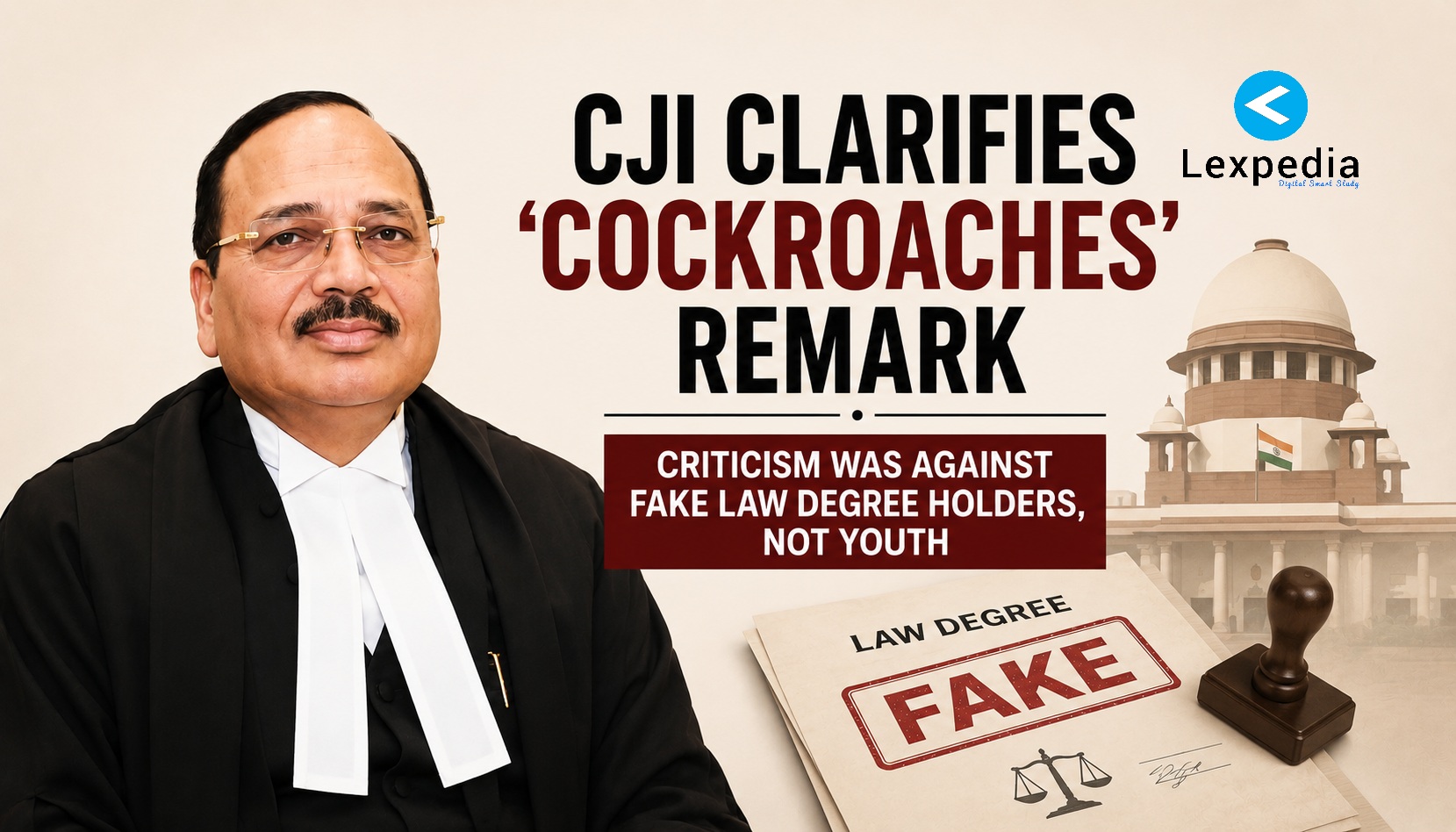
Chief Justice of India (CJI) Surya Kant on Saturday issued a clarification over the controversy surrounding his recent courtroom remarks comparing certain individuals to “cockroaches” and “parasites,” stating that sections of the media had “misquoted” and “misrepresented” his oral observations. The CJI clarified that his criticism was specifically directed at persons entering professional fields using fake and bogus degrees and not at unemployed youth or India’s younger generation.
The clarification came after widespread criticism erupted over comments made by the CJI during a hearing before a Supreme Court Bench comprising CJI Surya Kant and Justice Joymalya Bagchi. The Bench was hearing a petition filed by advocate Sanjay Dubey, who had challenged the process adopted by the Delhi High Court for conferment of the Senior Advocate designation. During the proceedings, the Bench strongly criticised what it termed a “frivolous” petition and made sharp observations concerning fake degree holders and misuse of institutional mechanisms.
Following media reports and public backlash, the CJI issued a formal clarification stating that his remarks had been taken out of context. “I am pained to read how a section of the media has misquoted my oral observations,” the Chief Justice said, adding that he had specifically criticised individuals who had entered professions such as the Bar through fake or forged qualifications. According to the clarification, the CJI said such persons had also entered media, social media, and other respected professions and were acting “like parasites” within institutions.
The CJI firmly denied allegations that he had criticised unemployed youth. He stated that it was “totally baseless” to suggest that his observations were directed against the youth of the nation. Emphasising his admiration for young Indians, the Chief Justice said that India’s youth inspired him and represented the pillars of a developed India.
The controversy began after portions of the oral observations made during Friday’s hearing circulated widely on social media and were reported by several media outlets. Reports quoted the CJI as referring to some unemployed youngsters as “cockroaches” who become media persons, RTI activists, or social media commentators and “attack everyone.” The remarks triggered criticism from opposition leaders, lawyers, civil society activists, journalists, and RTI campaigners, many of whom argued that such language from a constitutional authority was inappropriate and could undermine democratic dissent.
Several public figures reacted sharply to the controversy. Reports indicate that Rajya Sabha MP Manoj Jha expressed concern over the use of terms such as “cockroaches” and “parasites” by a constitutional authority. RTI activist Anjali Bhardwaj reportedly defended the role of activists and citizens questioning institutions, while senior advocate Prashant Bhushan described the remarks as unfortunate and said they sent a problematic message about dissent and accountability in a democracy.
At the same time, the original hearing also involved serious concerns raised by the Supreme Court regarding the growing issue of fake law degrees and fraudulent entry into the legal profession. The Bench observed that fake degree holders practicing law posed a grave threat to the integrity of the justice delivery system and even suggested that the Central Bureau of Investigation (CBI) should examine the issue in greater detail.
The case has once again highlighted the broader debate surrounding oral courtroom observations, media reporting of judicial comments, and the balance between criticism of institutional misuse and respect for democratic dissent. Legal experts have often pointed out that oral remarks made during hearings do not constitute binding judicial findings, yet such comments frequently shape public discourse when reported selectively or without full context.
The controversy also comes at a time when CJI Surya Kant, who became the 53rd Chief Justice of India in November 2025, has repeatedly spoken about preserving institutional integrity, tackling fake credentials in professional spaces, and strengthening public confidence in the judiciary.
CJI सूर्यकांत ने ‘कॉकरोच’ टिप्पणी पर मीडिया को बताया ‘भ्रामक’; कहा— आलोचना फर्जी डिग्री धारकों के खिलाफ थी, बेरोजगार युवाओं के नहीं
भारत के मुख्य न्यायाधीश (CJI) न्यायमूर्ति सूर्यकांत ने शनिवार को उनकी हालिया “कॉकरोच” और “परजीवी” संबंधी टिप्पणियों को लेकर उठे विवाद पर स्पष्टीकरण जारी करते हुए कहा कि मीडिया के एक वर्ग ने उनकी मौखिक टिप्पणियों को “गलत तरीके से उद्धृत” और “भ्रामक रूप से प्रस्तुत” किया। CJI ने स्पष्ट किया कि उनकी आलोचना उन लोगों के खिलाफ थी जो फर्जी और जाली डिग्रियों के सहारे पेशेवर क्षेत्रों में प्रवेश कर रहे हैं, न कि देश के बेरोजगार युवाओं या युवा पीढ़ी के खिलाफ।
यह स्पष्टीकरण उस समय आया जब सुप्रीम कोर्ट में की गई उनकी कुछ टिप्पणियों को लेकर व्यापक विवाद खड़ा हो गया। यह टिप्पणियां CJI सूर्यकांत और न्यायमूर्ति जॉयमाल्य बागची की पीठ के समक्ष सुनवाई के दौरान की गई थीं। पीठ अधिवक्ता संजय दुबे द्वारा दायर उस याचिका पर सुनवाई कर रही थी जिसमें दिल्ली हाई कोर्ट द्वारा सीनियर एडवोकेट पदनाम देने की प्रक्रिया को चुनौती दी गई थी। सुनवाई के दौरान पीठ ने याचिका को “तुच्छ” बताते हुए संस्थागत प्रक्रियाओं के दुरुपयोग और फर्जी डिग्री धारकों को लेकर तीखी टिप्पणियां की थीं।
मीडिया रिपोर्ट्स और सोशल मीडिया पर विवाद बढ़ने के बाद CJI ने औपचारिक स्पष्टीकरण जारी किया। उन्होंने कहा, “मुझे यह देखकर पीड़ा हुई कि मीडिया के एक वर्ग ने मेरी मौखिक टिप्पणियों को गलत तरीके से प्रस्तुत किया।” मुख्य न्यायाधीश ने कहा कि उन्होंने विशेष रूप से उन लोगों की आलोचना की थी जो फर्जी या जाली योग्यताओं के आधार पर वकालत तथा अन्य पेशों में प्रवेश कर रहे हैं। स्पष्टीकरण के अनुसार, CJI ने कहा कि ऐसे लोग मीडिया, सोशल मीडिया और अन्य सम्मानित पेशों में भी प्रवेश कर चुके हैं और संस्थाओं के भीतर “परजीवियों” की तरह कार्य कर रहे हैं।
CJI ने इस आरोप को सिरे से खारिज किया कि उनकी टिप्पणियां बेरोजगार युवाओं के खिलाफ थीं। उन्होंने कहा कि यह दावा “पूरी तरह निराधार” है कि उन्होंने देश के युवाओं को निशाना बनाया। युवाओं के प्रति अपनी प्रशंसा व्यक्त करते हुए मुख्य न्यायाधीश ने कहा कि भारत की युवा पीढ़ी उन्हें प्रेरित करती है और वही विकसित भारत की वास्तविक आधारशिला है।
विवाद उस समय शुरू हुआ जब शुक्रवार की सुनवाई के दौरान की गई कुछ मौखिक टिप्पणियां सोशल मीडिया पर व्यापक रूप से प्रसारित हुईं और कई मीडिया संस्थानों ने उन्हें प्रकाशित किया। कुछ रिपोर्ट्स में कहा गया कि CJI ने कुछ बेरोजगार युवाओं को “कॉकरोच” बताया जो बाद में मीडिया कर्मी, RTI कार्यकर्ता या सोशल मीडिया टिप्पणीकार बन जाते हैं और “हर किसी पर हमला करते हैं।” इन रिपोर्ट्स के बाद विपक्षी नेताओं, अधिवक्ताओं, सामाजिक कार्यकर्ताओं, पत्रकारों और RTI कार्यकर्ताओं ने तीखी प्रतिक्रिया दी। आलोचकों का कहना था कि किसी संवैधानिक पद पर बैठे व्यक्ति द्वारा इस प्रकार की भाषा का प्रयोग अनुचित है और इससे लोकतांत्रिक असहमति कमजोर हो सकती है।
कई सार्वजनिक हस्तियों ने भी इस विवाद पर प्रतिक्रिया दी। रिपोर्ट्स के अनुसार, राज्यसभा सांसद मनोज झा ने “कॉकरोच” और “परजीवी” जैसे शब्दों के इस्तेमाल पर चिंता व्यक्त की। RTI कार्यकर्ता अंजलि भारद्वाज ने संस्थाओं से सवाल पूछने वाले नागरिकों और कार्यकर्ताओं की भूमिका का समर्थन किया, जबकि वरिष्ठ अधिवक्ता प्रशांत भूषण ने इन टिप्पणियों को दुर्भाग्यपूर्ण बताते हुए कहा कि इससे लोकतंत्र में असहमति और जवाबदेही को लेकर गलत संदेश जाता है।
हालांकि, मूल सुनवाई के दौरान सुप्रीम कोर्ट ने फर्जी कानून डिग्रियों और धोखाधड़ी के माध्यम से कानूनी पेशे में प्रवेश करने के बढ़ते मामलों पर गंभीर चिंता भी व्यक्त की थी। पीठ ने कहा कि फर्जी डिग्री धारकों द्वारा वकालत करना न्याय व्यवस्था की विश्वसनीयता के लिए गंभीर खतरा है। अदालत ने यह भी सुझाव दिया कि इस पूरे मुद्दे की विस्तृत जांच केंद्रीय अन्वेषण ब्यूरो (CBI) द्वारा की जानी चाहिए।
यह मामला एक बार फिर अदालतों में की जाने वाली मौखिक टिप्पणियों, न्यायिक टिप्पणियों की मीडिया रिपोर्टिंग, तथा संस्थागत आलोचना और लोकतांत्रिक असहमति के बीच संतुलन को लेकर बहस का विषय बन गया है। विधि विशेषज्ञों का कहना है कि अदालतों में की गई मौखिक टिप्पणियां अंतिम न्यायिक निष्कर्ष नहीं होतीं, लेकिन जब उन्हें संदर्भ से अलग कर प्रस्तुत किया जाता है, तो वे सार्वजनिक विमर्श को गहराई से प्रभावित कर सकती हैं।
यह विवाद ऐसे समय सामने आया है जब CJI सूर्यकांत, जिन्होंने नवंबर 2025 में भारत के 53वें मुख्य न्यायाधीश के रूप में पदभार संभाला था, लगातार संस्थागत शुचिता बनाए रखने, पेशेवर क्षेत्रों में फर्जी प्रमाणपत्रों पर रोक लगाने और न्यायपालिका में जनता के विश्वास को मजबूत करने की आवश्यकता पर जोर देते रहे हैं।