
Vineet Narain vs. Union of India, 1997
Judicial Oversight and Institutional Independence: The Vineet Narain Case and Its Impact on Investigative Agencies in India
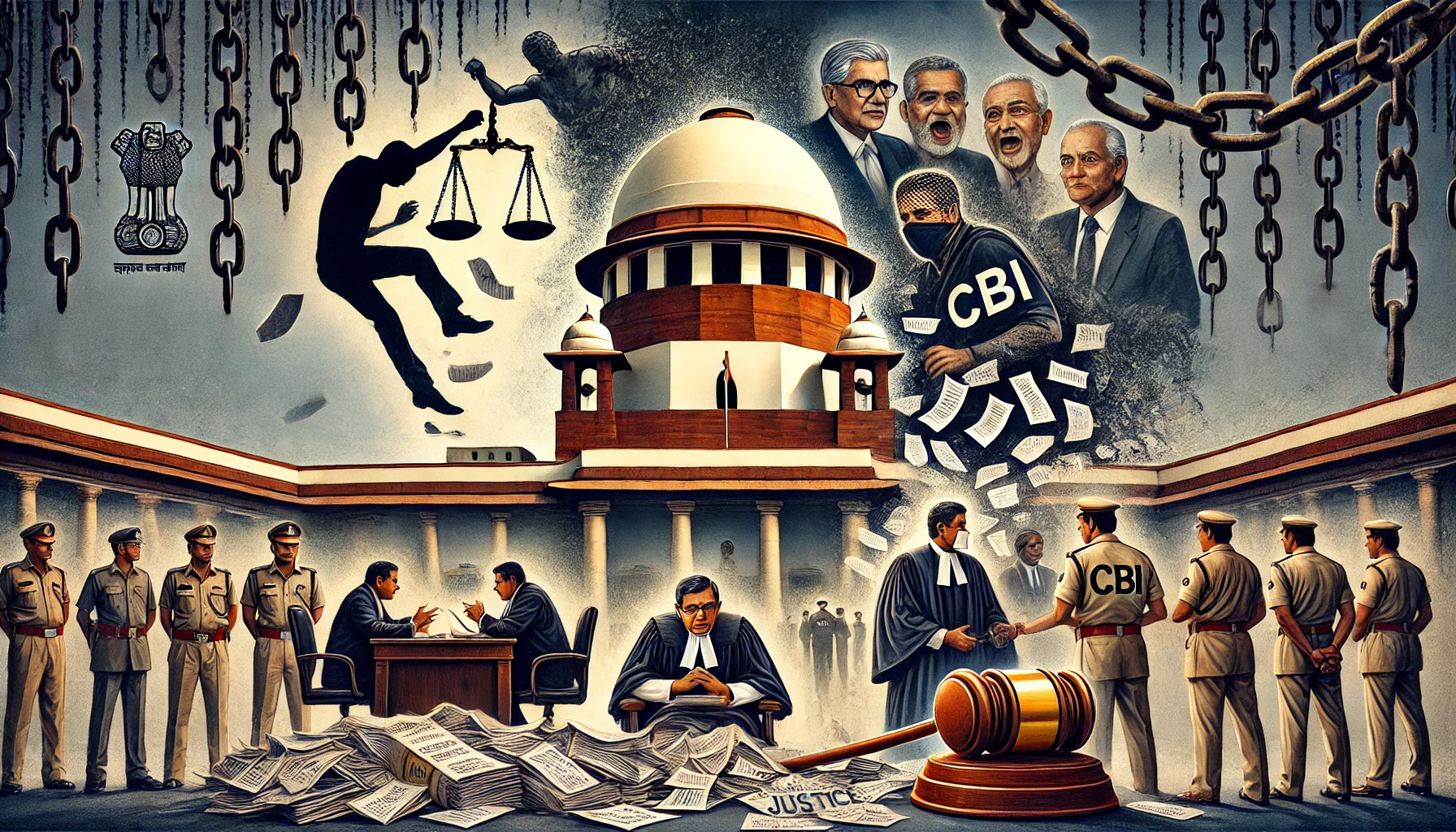
Judgement Details
Court
Supreme Court of India
Date of Decision
18 December 1997
Judges
S.P. BHARUCHA & S.C. SEN
Citation
AIR 1998 SUPREME COURT 889
Acts / Provisions
Facts of the Case
It is a landmark case in Indian legal history that played a crucial role in strengthening the independence and accountability of the Central Bureau of Investigation (CBI) and other investigative agencies.
- The case arose from the Hawala scandal of the early 1990s, which involved illegal transactions through the Hawala route.
- Several politicians, bureaucrats, and influential figures were accused of receiving kickbacks from foreign sources through Hawala brokers (notably, the Jain brothers).
- A list of prominent leaders, including ministers and officials, was found in the diaries of these Hawala operators.
The facts of this case are that there is an arrest of an officer of the terrorist outfit Hizbul Mujahideen revealed bribery payments made to high-ranking Indian politicians and bureaucrats by the terrorist outfit known as the historic Hawala Scandal there was nothing done post the discovery in terms of a substantial investigation.
- Vineet Narain, a journalist, and his team investigated and exposed the scam through a series of reports.
- Dissatisfied with the CBI’s inaction, he filed a Public Interest Litigation (PIL) in the Supreme Court under Article 32 of the Indian Constitution.
- The PIL sought proper investigation and prosecution of those involved.
- The CBI and other agencies were reluctant to take action against influential politicians.
- The case exposed how investigative agencies were being misused or manipulated by the government.
Issues
- Whether the CBI, Enforcement Directorate (ED), and other agencies were functioning independently and free from political influence.
- Whether the government's interference in investigations violated the rule of law.
- Whether the court could issue guidelines to ensure the autonomy of investigative agencies.
- Whether the CBI had failed in its responsibility to investigate allegations of public corruption?
Judgement
The Supreme Court of India, in a historic judgment, laid down strict guidelines to ensure the independence of investigative agencies.
Fixed Tenure for CBI & ED Chiefs:
- The Director of the CBI must have a minimum tenure of two years, irrespective of government changes.
- Similar protection was given to the Enforcement Directorate (ED) chief.
Autonomy & Insulation from Political Influence:
- The agencies were instructed to act independently, without interference from the ruling government.
- The government was prohibited from controlling investigations.
Monitoring of Sensitive Cases:
- The Central Vigilance Commission (CVC) was given supervisory powers over the CBI to ensure fair investigations.
- The CBI was directed to report its investigations to the CVC.
No Government Approval for Prosecution in Corruption Cases: The court ruled that the government could not delay or deny prosecution in corruption cases involving high-ranking officials.
Strengthening Rule of Law: The ruling emphasized that no one is above the law, not even top politicians and bureaucrats.
Impact of the Judgment:
- Strengthened CBI’s Independence: The ruling ensured that the CBI functioned autonomously without political pressure.
- Established the CVC as an Independent Body: The Central Vigilance Commission (CVC) was made a statutory body to oversee anti-corruption measures.
- Set a Precedent for Future Reforms: The case became a foundation for various judicial interventions in corruption cases, ensuring accountability.
This case concerns the historic Hawala scandal in India, which uncovered possible bribery payments to several high-ranking Indian politicians and bureaucrats from a funding source linked to suspected terrorists.
- Following news coverage of the scandal, members of the public were dismayed by the failure of the Central Bureau of Investigation (CBI) to initiate investigations of the officials with the apparent intent to protect certain implicated individuals who were extremely influential in government and politics.
- This litigation was the result of public interest petitions filed on these matters with the Court pursuant to Article 32 of the Indian Constitution (which empowers the Supreme Court to issue directions for the enforcement of fundamental rights contained in the Constitution).
- The Court agreed that the CBI had failed in its responsibility to investigate allegations of public corruption. It laid down guidelines to ensure independence and autonomy of the CBI and ordered that the CBI be placed under the supervision of the Central Vigilance Commission (CVC), an independent governmental agency intended to be free from executive control or interference.
- This directive removed the CBI from the supervision of the Central Government thought to be partly responsible for the inertia that contributed to the CBI’s previous lack of urgency with respect to the investigation of high-ranking officials.
- The CVC was now responsible for ensuring that allegations of corruption against public officials were thoroughly investigated regardless of the identity of the accused and without interference from the Government.
Held
- The Court held in this case that this case is considered a landmark case that helped to restore faith in the rule of law in India. The term “continuing mandamus” was coined in this case, where the reach of the writ of mandamus was extended to monitor investigations from time to time.
- The judgement removed the CBI from the supervision of the Central Government and placed it under the supervision of the independent Central Vigilance Commission. The guidelines laid down by the court helped to ensure the independence and autonomy of the CBI and other special investigating agencies.
- This case is also significant because the Supreme Court liberally interpreted its powers under the Constitution to devise various innovative procedural techniques.
- These include: the appointment of amicus curiae to provide assistance to the court on legal issues: exercising supervisory jurisdiction to monitor implementation, and delivering detailed directions to the executive and formulating guidelines to fill a legislative vacuum on the issue of public corruption.
- This case created public awareness regarding the issue of corruption, and inspired people to engage with the judicial system through the process of public interest litigation.
Analysis
The Vineet Narain case was a milestone in India’s fight against corruption and political interference in investigations. It reinforced the principles of transparency, accountability, and rule of law while strengthening institutions like the CBI and CVC.
The judgment remains one of the most significant steps toward ensuring a fair and unbiased criminal justice system in India.