
Mac Pherson vs. M.N. Appanna & another, 1951
Counter - Offer
Judgement Details
Court
Supreme Court of India
Date of Decision
9 February 1951
Judges
Saiyid Fazal Ali ⦁ B.K. Mukherjee ⦁ N. Chandrasekhara Aiyar
Citation
1951 AIR 184
Acts / Provisions
Facts of the Case
The case of Col. D.I. Mac Pherson vs. M.N. Appanna and Another, decided on February 9, 1951, revolves around the negotiation process for the sale of a property known as "Morvern Lodge" in Mercara.
Key Facts:
- Initial Offer: In mid-1944, the plaintiff, M.N. Appanna, expressed interest in purchasing "Morvern Lodge" and requested Mr. White, an associate of the property's owner, Col. D.I. Mac Pherson, to inquire about its availability. On June 1, 1944, White cabled Mac Pherson: "Have enquiries Mercara bungalow if for sale, wire lowest figure."
- Subsequent Offers: On July 24, 1944, Appanna offered Rs. 5,000 for the bungalow and sought payment instructions. Following this, Mr. Youngman, the manager overseeing "Morvern Lodge" in Mac Pherson's absence, cabled Mac Pherson about an offer of Rs. 6,000 for immediate possession.
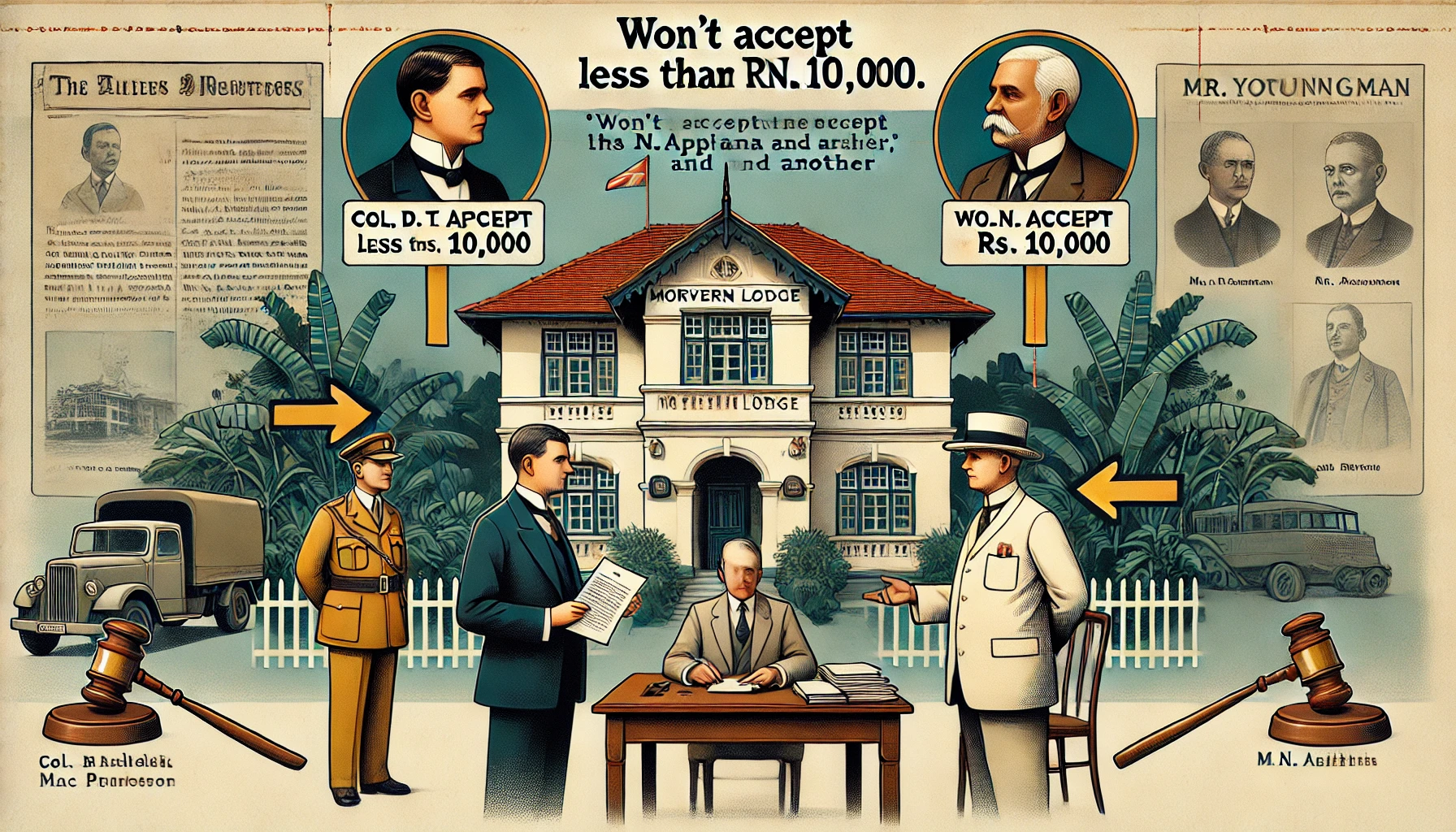
- Owner's Response: On August 5, 1944, Mac Pherson replied via cable: "Won't accept less than rupees ten thousand." Youngman conveyed this to Appanna on August 9, 1944.
- Plaintiff's Acceptance: Appanna claimed that upon receiving this information, he immediately accepted the "counter-offer" and confirmed it in writing on August 14, 1944. However, in his testimony, he mentioned informing Youngman in person on August 11, 1944, about his willingness to pay Rs. 10,000 and requested prompt possession.
- Higher Offer Received: On August 17, 1944, another individual, Subbayya, offered Rs. 10,500 for the property. Youngman did not relay this offer to Mac Pherson.
- Communication with Owner: On August 26, 1944, Youngman cabled Mac Pherson: "Offered ten thousand Morvern Lodge immediate possession. May I sell." That same day, White sent a cable to Mac Pherson stating: "Hold offer for Morvern Bungalow rupees eleven thousand cash subject immediately acceptance and occupation. Strongly recommended acceptance."
- Acceptance of Higher Offer: Mac Pherson accepted White's offer of Rs. 11,000, leading to the sale of "Morvern Lodge" to the second defendant.
- Legal Action: Feeling aggrieved, Appanna filed a suit for specific performance, asserting that a binding contract was established when he accepted Mac Pherson's "counter-offer" of Rs. 10,000.
It was held that the defendant did not make any offer or counter-offer in his cable but was merely inviting offers. There was no assent to the plaintiff's offer to buy at Rs. 10,000 and, therefore, no concluded contract.
Issues
- Whether it could be held that there was a concluded contract for the sale of "Morvern Lodge" in favor of the plaintiff on the 14th August, as stated by him in the plaint?
- Did the defendant make a counteroffer when saying won't accept less than 10,000?
Judgement
ARGUMENTS:-
- Mr. Jindra Lal, counsel for the plaintiff, who pressed his points with force and ability, contended that by the 26th August, 1944, Youngman had come under the influence of the rival bidder or at least that of White who was supporting him, and the cable to the first defendant was deliberately framed by Youngman, in such a way as to prejudice the plaintiff.
- On the other hand, Youngman has frankly stated in his evidence that he felt it improper to entertain Subbayya's higher offer and did not communicate it to the first defendant.
- This statement is supported by the cable of the 26th August and, if Youngman can be said to have had any leaning at all, it was certainly in favour of the plaintiff. In these circumstances, it would be difficult to hold that Youngman had deliberately missed- scribed the plaintiff's acceptance of the counter-offer as his offer in the cable which he sent on the 26th August to the first defendant.
JUDGMENT :-
It was held by the Supreme Court that there was no offer or counter-offer but only an invitation to offer by the defendant to whom the final offer was made by the plaintiff. The defendant did not assent to this final offer of Rs. 10000 so no conclusive contract was made. In the absence of contract there cannot be any specific performance.
Held
It was held by the Supreme Court in this case that mere statement of the lowest price at which the offeror would sell does not amount to contract.
Analysis
It was held that in this case the letter from the defendant's agent was not a counter offer but was a mere quotation amounting to invitation to offer. The plaintiff's willingness to pay Rs. 10,000 was an offer and since the same had not yet been accepted, there was no binding contract between the parties.