
Bandhua Mukti Morcha vs. Union of India, 1983
Letter addressed to only chief justice not individual judge by person acting 'pro bono publico' can be treated as writ petition.
Judgement Details
Court
Supreme Court of India
Date of Decision
16 December 1983
Judges
P. N. Bhagwati || R.S Pathak and A.N Sen JJ.
Citation
AIR 1984 SC 802: 1984 Lab IC 560: (1984) 3 SCC 161
Acts / Provisions
Facts of the Case
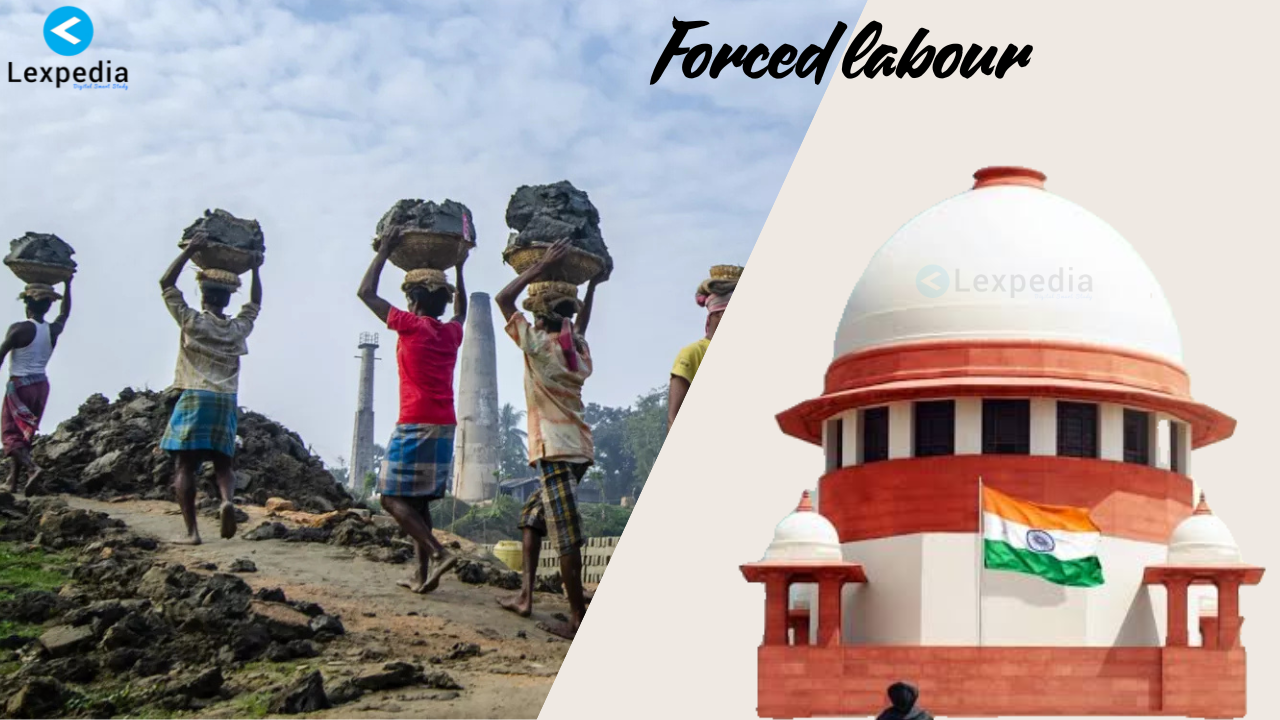
The Petitioner was an organisation dedicated to the cause of release of bonded labourers in the country. The system of bonded labour had been prevalent in various parts of the country since prior to the attainment of political freedom and it constitutes an ugly and shameful feature of our own national life.
The petitioner, an organisation dedicated to the cause of the release of bonded labourers in the country, addressed a letter to Hon'ble Bhagwati, J. alleging:
- that there were a large number of labourers from different parts of the country who were working in some of the stone quarries situated in district Faridabad, State of Haryana under "inhuman and intolerable conditions";
- that a large number of them were bonded labourers;
- that the provisions of the Constitution and various social welfare laws passed for the benefit of the said workmen were not being implemented in regard to these labourers.
The petitioner also mentioned in the letter the names of the stone quarries and particulars of labourers who were working as bonded labourers and prayed that a writ be issued for proper implementation of the various provisions of the social welfare legislations, such as Mines Act, 1952 Inter-State Migrant Workmen (Regulation of Employment and Conditions of Service) Act, 1979, Contract Labour (Regulation and Abolition) Act, 1970, Bonded Labour System (Abolition) Act, 1976, Minimum Wages Act, Workmen's Compensation Act, Payment of Wages Act, Employees State Insurance Act, Maternity Benefits Act etc. applicable to these labourers working in the said stone quarries with a view to ending the misery, suffering and the helplessness of "these victims of the most inhuman exploitation."
The petitioner vide letter dated 25th February, 1982 pointed out that in the mines of the Sh. S.L Sharma, Gurukula Indra Prastha, Post: Amar Nagar, Faridabad District a large Number of people/labourers are languishing under abject conditions of bandage for last about 10 years and the petitioner gave names of the 11 bonded labourers who were from village Asarha, Barmer district Of Rajasthan, 7 bonded labourers who were from village Bharol, District Jhansi of Madhya Pradesh and 23 bonded labourers who were from village Borodia, Bhanger Tehsil Khurai, District of Sagar, Madhya Pradesh. The petitioner pointed out that there were yet another 14 bonded labourers from Lalit Pur in Uttar Pradesh.
Issues
- Release of bonded labourers from bondages who were languishing for about 10 years in stone quarries.
Judgement
- The letter dated 25th February, 1982 addressed by the petitioner was treated as a writ petition and by an order dated 26th February, 1982, the court issued notice on the writ petition and appointed two advocates as Commissioners to visit the stone quarries and make report to the court on or before 2nd March, 1982. They submitted the report on the same day.
- And it is the fundamental right of everyone in India, assured under the interpretation given to the Article 21 by the court to live with human dignity, free from exploitation. This right under Art. 21 derives its life from the Directive Principles of The State Policy and particular Clauses (e) and (f) of Article 39 and Article 41 and 42 and at the least, therefore, it must include protection of the health and strength of workers, men and women and of the tender age children against abuse, opportunities and facilities for children to develop in a healthy manner and in conditions of freedom and dignity.
- Chief Justice Bhagawati speaking for the Bench held that PIL is not in the nature of adversary litigation but it is a challenge and an opportunity for the Government and its officers to take basic human rights meaningful to the deprived sections of the society.
- It went on to state that when the court entertains PIL, it does not do so in a caviling spirit or in a controversial mood or with a view to tilting executive authority, but its attempt is only to endure observance of social and economic programmes framed for the benefit of deprived sections and to protect basic human rights.
- Justice Pathak and Justice Sen although agreed with Justice Bhagawati that PIL through letter should be permitted, but expressed the view that in entertaining such petitions the court must be cautious so that it might not be abused.
- The Supreme Court said that when public interest litigation is initiated alleging that certain workmen are living in bondage and under inhuman conditions, it is not expected of the government to raise such preliminary objections.
- Instead, the Government should welcome an inquiry by the Court, so that it can be found if there are workers living in bondage or otherwise providing forced labour, and the Government can set right such a situation.
- Article 32(2) includes within its matrix, power to issue any direction, order or writs which may be appropriate for the enforcement of the fundamental right in question and this is made amply clear by the inclusive nature of the clause which refers to writ in the nature of habeas corpus, mandamus, prohibition, quo warranto and certiorari. Therefore, SC has the power to appoint a Commission for enquiry.
- It is a fundamental right of everyone in this country, assured under the interpretation given to Art. 21 by this Court in Francis Mullin’s case to live with human dignity, free from exploitation.
Held
It was held by the court that equal protection must be given to men, women and children of tender age against abuse, opportunities and facilities to develop in a healthy manner and with freedom and dignity.
Analysis
Permitting the Public Interest Litigation gave instance to public-spirited citizens for the enforcement of Constitutional and legal rights. Making laws itself would not do any good until and unless they are implemented in letter and spirit. As they say “Arms alone are not enough to keep the peace it must be kept by the men alone”, Child labour prevailed and is still prevalent in our Indian society and the only way to curb it besides making laws is to awaken the human conscious and to impart education to every citizen if this country.
The Court in Neerja Chaudhari v. State of M.P enumerated the importance of the abolition of bonded labour by stating that, it is not enough merely to identify and release bonded labour it is important that they must be rehabilitated because without rehabilitation they would be driven to poverty, helplessness, and despair thus into serfdom once again.