Delhi Homelessness Case: Supreme Court Highlights Shelters’ Inadequacy and Poor Conditions
Lexpedia · 14 February 2025 · 3 min read
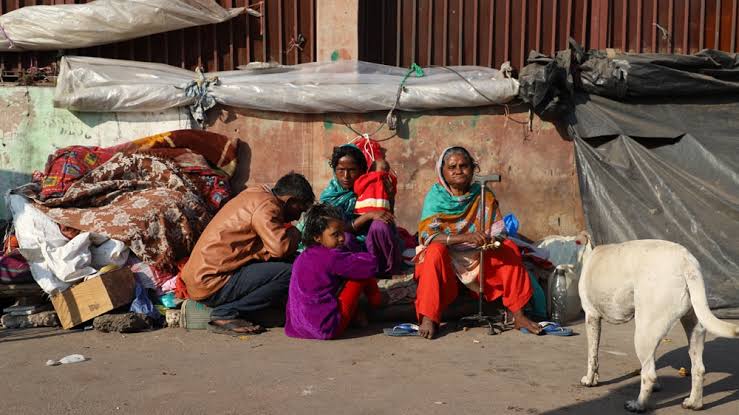
The Supreme Court of India recently heard a crucial matter concerning the right to shelter for homeless individuals in urban areas, highlighting the severe inadequacies of shelters across the country, particularly in Delhi. During the proceedings, Advocate Prashant Bhushan (representing the petitioners) emphasized the vast gap between the shelter capacity and the homeless population, citing that Delhi’s shelter system can accommodate only 5,900 people, while the estimated homeless population in the city is around 3 lakh.
Shelter Capacity vs. Homeless Population
- Bhushan pointed out that despite the Delhi Urban Shelter Improvement Board (DUSIB) stating the shelter capacity to be around 5,900, the homeless population in Delhi is staggering at about 3 lakh. The sheer scale of the problem underscores the ineffectiveness of the current shelter system in accommodating the homeless.
- Justice Gavai remarked on the poor condition of the shelters, questioning whether sleeping on the road was worse than staying in an uninhabitable shelter home. He also pondered on the broader issue of how providing free shelter and resources to the homeless might not be as effective as integrating them into mainstream society, enabling them to contribute to the nation’s growth instead of depending on government aid.
Issues with Shelter Conditions and State Committees
The petitioners brought to the Court’s attention that several state-wise committees, which had been constituted by the Court to monitor the implementation of its directions on homelessness, were not functioning effectively. These committees’ lack of proper functioning was contributing to the continuing failure in addressing the homelessness crisis.
Background of the Case
- The ongoing case, E.R. Kumar v. Union of India, has been addressing the right to shelter for the homeless in urban areas since 2003. A significant development occurred in October 2022, when the Court directed all states and Union Territories (UTs) to file status reports on the homelessness situation and ensure temporary shelter arrangements for the urban homeless.
- In subsequent hearings, particularly in December 2023, Prashant Bhushan highlighted two main issues: inadequacy of shelters and the poor conditions of these shelters. He argued that while the Court had earlier directed an increase in shelter capacity, Delhi still falls far short of the required number of shelters, with a reported 17000 shelter capacity, whereas the minimum need should be over 2 lakh beds.
- Bhushan also raised the alarming issue of 9 shelters being demolished after the Court’s orders in 2022, displacing 450 homeless persons. Additionally, 5 more shelters were closed under the pretext of being in a dilapidated condition, further displacing 250 homeless persons. Despite the Court’s earlier direction to restrain such demolitions without its prior approval, these closures continued unabated.
Discussions on Funding and Schemes
- A significant part of the hearing was devoted to the discussion about funding and scheme revival. The petitioners suggested that the National Urban Livelihoods Mission (NULM), which lapsed in 2018, should be revived to support shelter operations. Justice Gavai emphasized that states should review the funding aspect under the amended scheme and work together with the Central Government to address these concerns.
- The Attorney General (AG), Venkataramani, responded by acknowledging the need for a new scheme to tackle these issues. The Court also encouraged exploring opportunities to gain support through Corporate Social Responsibility (CSR) contributions, urging corporate entities to collaborate in addressing the homelessness crisis.
Next Steps
The Supreme Court adjourned the hearing and asked the Delhi Urban Shelter Improvement Board (DUSIB) to submit an affidavit detailing the number of people currently accommodated in the shelters and the plans to address any capacity deficits. The Court also reiterated its earlier directions, urging states and Union Territories to actively work towards improving the situation for the urban homeless.
Case Title: E.R. Kumar v. Union of India | Writ Petition (Civil) No. 55 of 2003