Unravelling the Complexities of Manipur Violence
Lexpedia · 19 August 2023 · 4 min read
Introduction:
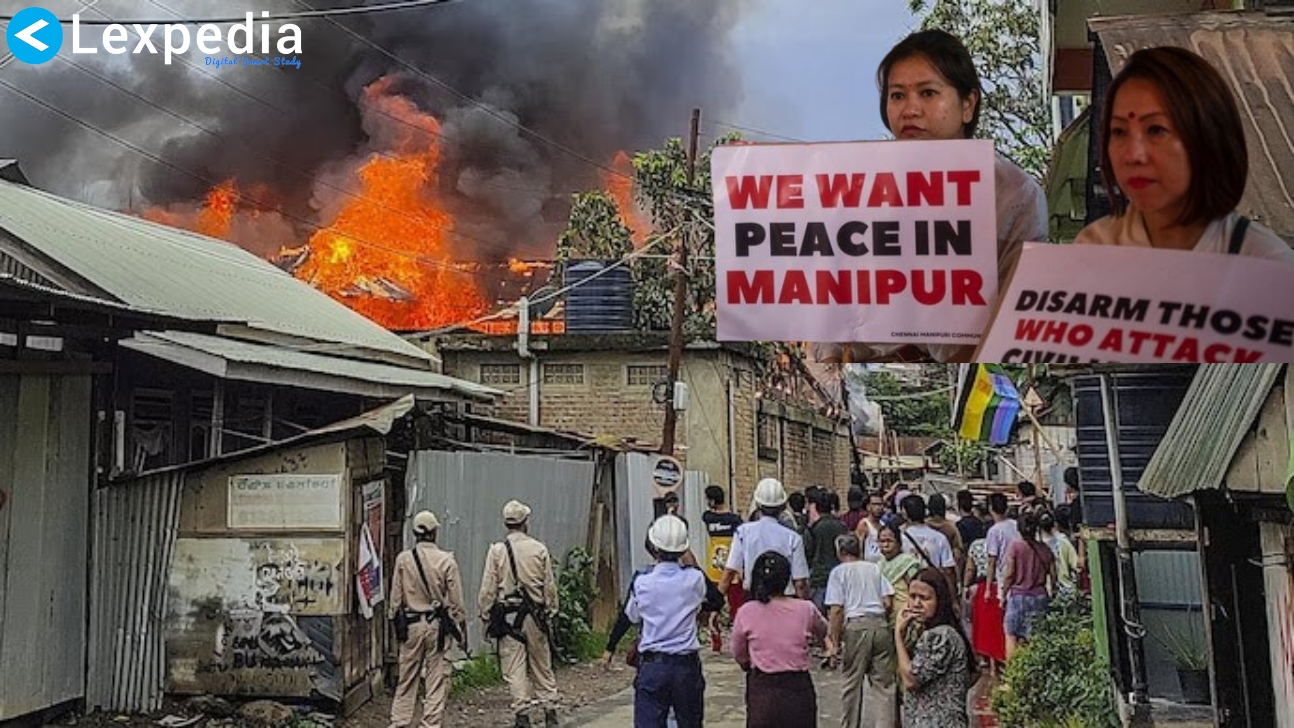
Manipur, a northeastern state of India, is known for its cultural richness, diverse communities, and stunning landscapes. However, beneath its picturesque exterior lies a history of violence and conflict that has often marred the region's progress and stability. The Manipur violence is a multifaceted issue involving historical, political, social, and economic factors that have contributed to the complex situation that the state faces today.
Historical Roots: To understand the Manipur violence, one must delve into its historical context. Manipur's history has been marked by the interaction of various ethnic groups, including the Meiteis, Nagas, and Kukis, each with distinct cultures, languages, and aspirations. The integration of Manipur into the Indian Union in 1949 led to tensions and conflicts, as different communities had varying reactions to the process. This laid the groundwork for identity-based conflicts that would continue to plague the state.
Ethnic Tensions: Ethnic tensions have been a significant driving force behind the violence in Manipur. The demands for autonomy and recognition by different ethnic groups often clash with each other and with the central government's policies. The Nagas, seeking greater autonomy, have been engaged in a struggle for a separate Nagalim that encompasses parts of Manipur. This has resulted in tensions with the Meitei community, which fears territorial integrity loss. Similarly, clashes between the Kukis and the Nagas over land and resources have further exacerbated the situation.
Insurgency and Militancy: The proliferation of insurgent groups in Manipur has significantly contributed to the violence in the region. These groups, often driven by grievances related to identity, political representation, and socio-economic disparities, resort to militancy as a means of expressing their demands. The United National Liberation Front (UNLF), People's Liberation Army (PLA), and various other groups have operated in the region, engaging in activities that disrupt peace and stability.
Human Rights Concerns: The Manipur violence has also raised grave human rights concerns. Incidents of extrajudicial killings forced disappearances, and alleged sexual violence by security forces have been reported. These incidents not only highlight the lack of accountability but also deepen mistrust between communities and authorities. Human rights violations have fuelled further resentment and perpetuated a cycle of violence.
Developmental Disparities: The uneven development within Manipur has contributed to the perpetuation of violence. Many regions in the state lack access to basic amenities, education, and healthcare. This creates a sense of marginalization and alienation among certain communities, making them susceptible to the influence of insurgent groups promising change. The lack of economic opportunities also pushes some individuals towards militancy as a means of sustenance.
Political Dimensions: The Manipur violence is also intricately connected to the political dimensions of the region. The complex web of state and central government policies, as well as varying degrees of autonomy granted to different states within the northeastern region, has often led to confusion and conflict. The imposition of the Armed Forces (Special Powers) Act (AFSPA) has been a point of contention, with some arguing it has led to abuses of power by security forces, while others view it as a necessary measure for maintaining order.
Peace Initiatives and Challenges: Efforts to bring peace to Manipur have been ongoing for years, but challenges persist. Talks between the central government, various insurgent groups, and civil society organizations have taken place, aiming to find a peaceful resolution. However, finding common ground among the diverse aspirations and grievances of different communities is a complex task. Moreover, there are groups that reject dialogue and continue to pursue violent means.
Conclusion:
The Manipur violence is a result of a complex interplay of historical, ethnic, political, social, and economic factors. The state's diversity, while a source of strength, has also been a source of conflict. Addressing the violence requires a multi-pronged approach that acknowledges the grievances of all communities, fosters dialogue, ensures equitable development and upholds human rights. Achieving lasting peace in Manipur will require a concerted effort from both the government and civil society to create an environment where all communities can coexist harmoniously and thrive.